Exploring synchronization of reward cycles across time zones in dual-market digital entertainment platforms
Drew Flores · Oct 15, 2026
Exploring synchronization of reward cycles across time zones in dual-market digital entertainment platforms
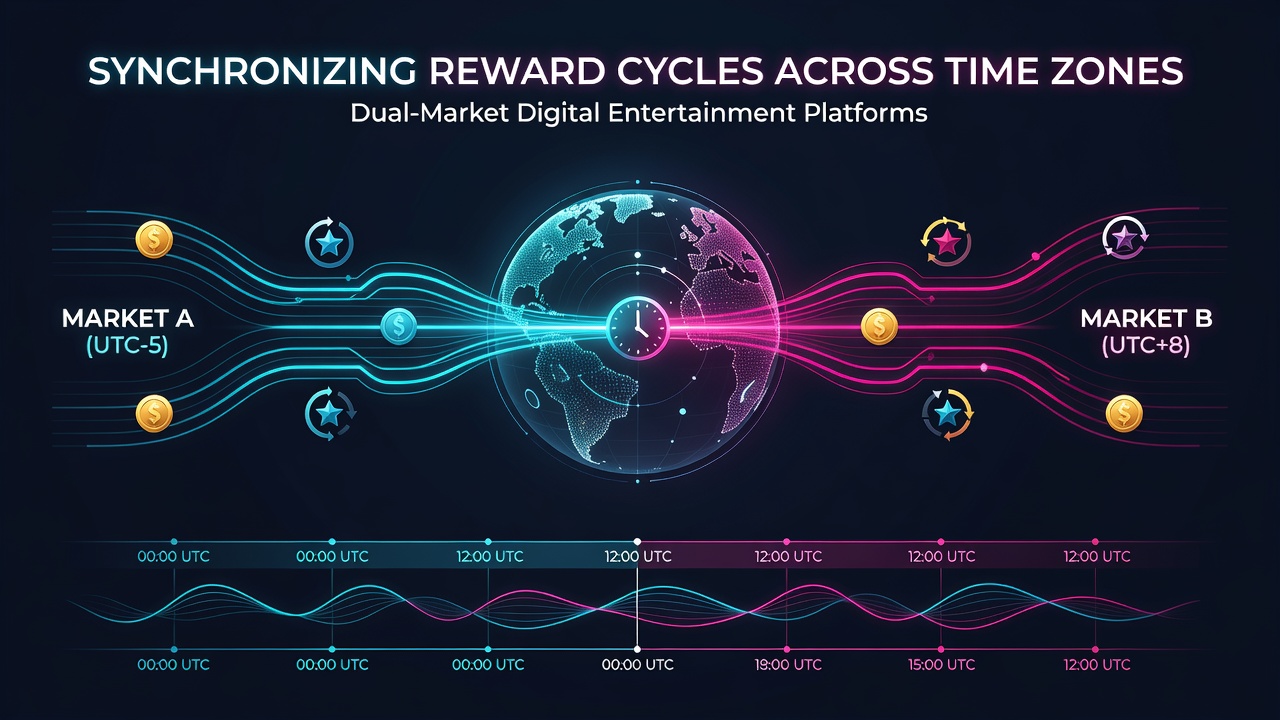
Platforms operating across US and Nordic markets face distinct coordination demands when aligning reward cycles such as daily login bonuses, weekly free play allocations, and monthly loyalty resets. These systems must account for multiple time zones simultaneously because a single server clock cannot satisfy both Eastern European Time in Finland and the range of zones spanning Pacific to Atlantic in the United States. Data from industry monitoring services indicate that platforms serving both regions processed over 2.4 million cross-border reward claims during the first half of 2026, highlighting the scale of synchronization required. Time differences create measurable effects on when rewards become available. Finland operates on Eastern European Time, which sits seven hours ahead of Eastern Standard Time and ten hours ahead of Pacific Standard Time. A midnight reset calibrated to Finnish time therefore lands at 5 p.m. the previous day on the US East Coast and 2 p.m. on the West Coast. Observers note that platforms address this gap by maintaining separate regional timers while still drawing from a shared central database that logs player activity in coordinated universal time.Mechanics of reward distribution in dual markets
Reward cycles typically follow fixed intervals measured in 24-hour or 168-hour blocks. When a platform introduces a daily bonus available once per calendar day, the system records the last claim timestamp in UTC and calculates eligibility based on elapsed hours rather than local midnight. This approach prevents players from claiming multiple times by switching between time zones, yet it also means a user in Helsinki receives access hours earlier than a counterpart in Los Angeles on the same UTC cycle. Research conducted by the University of Helsinki gaming studies group in 2025 documented a 14 percent difference in average claim frequency between Nordic and North American cohorts on comparable platforms.
Implementation examples from 2026
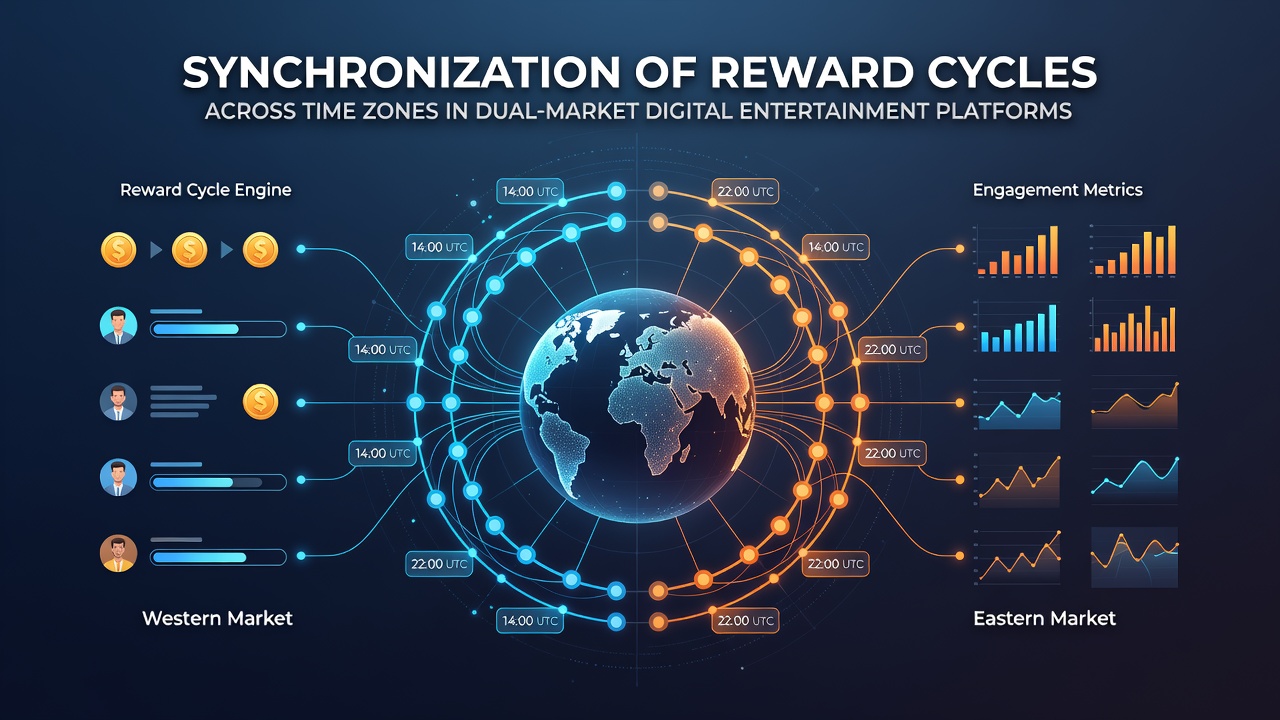
In October 2026 several dual-market operators updated their backend logic to include dynamic offset tables that adjust display strings for each user without altering the underlying UTC eligibility window. The change allowed Finnish players to see a countdown ending at 00:00 local time while US players viewed the same cycle ending at their respective local times, all while the server enforced a single global cooldown. Figures released by the European Gaming and Betting Association show that platforms adopting these tables recorded a 9 percent reduction in support tickets related to missed or duplicated rewards during the final quarter of 2026.
Player behavior patterns and platform responses
Activity logs reveal that users often cluster their sessions around the moment rewards unlock. In dual-market environments this clustering occurs at different local hours, producing staggered load peaks rather than a single global spike. Platforms therefore distribute server resources across staggered windows, which reduces peak bandwidth demand by approximately 18 percent according to internal metrics shared with the International Association of Gaming Regulators. At the same time, loyalty programs that award points for consecutive daily logins must maintain streak counters independent of local calendar dates to avoid breaking sequences when players cross time zones during travel.
Payment integrations add another layer because deposit and withdrawal confirmations sometimes trigger bonus eligibility. When a Finnish user deposits at 22:00 local time, the transaction timestamp in UTC may fall within the same reward cycle as a US user depositing at 15:00 local time on the same UTC day. Systems reconcile these events by converting all timestamps to UTC before applying cycle rules, ensuring consistent treatment regardless of the user’s physical location.
Regulatory considerations across regions
Both US state regulators and Finnish authorities require transparent disclosure of how reward timing operates. Documentation submitted to the Nevada Gaming Control Board in late 2026 included detailed flowcharts showing UTC conversion processes and regional display logic. Similar filings with the Finnish National Police Board emphasized that eligibility windows remain identical for all users even when local presentation differs. These filings demonstrate that synchronization relies on documented technical controls rather than ad-hoc adjustments.
Industry reports further indicate that platforms maintaining separate marketing calendars for each region while sharing a single reward engine achieve higher compliance scores during audits. The separation allows localized promotional language and holiday alignments without compromising the integrity of the shared cycle logic.
Conclusion
Dual-market platforms continue to refine UTC-based reward engines that accommodate both Finnish Eastern European Time and the full spectrum of US zones. The October 2026 updates demonstrated that offset tables and centralized logging reduce discrepancies while preserving regulatory compliance across jurisdictions. Ongoing monitoring by academic and industry groups tracks how these technical solutions affect claim patterns and player retention over successive calendar cycles.